Most of us don’t give much thought to the water coming out of the kitchen tap. We turn the handle, fill a glass, rinse some vegetables, or start the coffee maker and carry on with the day. Water is just there. Until it isn’t quite right.
Maybe you’ve noticed chalky marks around the faucets. Perhaps your shower leaves your skin feeling unusually dry, or your kettle develops a crusty layer that seems to come back no matter how often you clean it. Sometimes the problem is taste or odor. Other times, it’s something you can’t see at all.
The tricky part is that different water problems need different solutions. A system that works beautifully for hard water may do very little for another type of concern. That’s why choosing water treatment equipment should begin with understanding your home’s water, not with picking the most expensive product on the shelf.
First, Find Out What’s in Your Water
Clear water isn’t necessarily perfect water. Many substances that affect water quality can’t be seen, smelled, or tasted.
A basic water test can help identify characteristics such as hardness, pH, chlorine, iron, sediment, and other potential concerns. If your home relies on a private well, regular testing can be particularly useful because groundwater conditions can change.
Municipal water is generally treated before it reaches your home, but that doesn’t mean every household has the same experience. Plumbing, building age, local water conditions, and even the condition of pipes can influence what comes out of your tap.
Think of testing as the starting point. You’re gathering information before spending money, which is almost always a sensible move.
When Hard Water Becomes a Household Headache
Hard water is common and usually contains elevated amounts of minerals such as calcium and magnesium. These minerals aren’t necessarily something to panic about, but they can be a real nuisance around the house.
The evidence tends to show up in ordinary places. White deposits around faucets. Cloudy glasses. Soap that doesn’t seem to rinse away properly. Scale inside water heaters and appliances.
For households dealing with significant hardness, water softeners can be a practical option. Traditional softeners use an ion-exchange process to reduce calcium and magnesium, which can help control scale and make everyday cleaning less frustrating.
You may also notice that soap and shampoo lather differently. Clothes can feel less stiff after washing, and fixtures may stay cleaner for longer. It’s not magic, really — it’s just removing the minerals responsible for many of those annoying deposits.
Filtration Is a Different Job
One common misconception is that a water softener and a filter are basically the same thing. They’re not.
Softening primarily addresses hardness minerals. Filtration, depending on the technology, can target things such as sediment, chlorine, certain chemicals, or other unwanted substances.
That’s why water filtration needs to be chosen according to the actual problem. An activated carbon filter, for example, may be useful for improving taste and reducing certain chemicals, while a sediment filter is designed to capture particles.
More advanced technologies can target specific contaminants, but they aren’t automatically necessary for every home. If your water has one particular issue, there’s little point paying for a system designed to solve five problems you don’t actually have.
What About the Water You Drink?
There’s another question worth asking: do you want to treat every drop of water entering the house, or are you mainly concerned about drinking and cooking water?
Whole-house treatment can make sense when water quality concerns affect showers, laundry, appliances, and other parts of daily life. But a point-of-use system may be enough when your main priority is the kitchen tap.
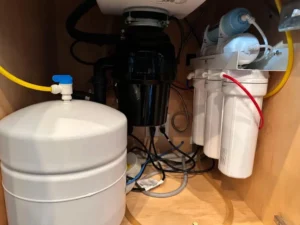
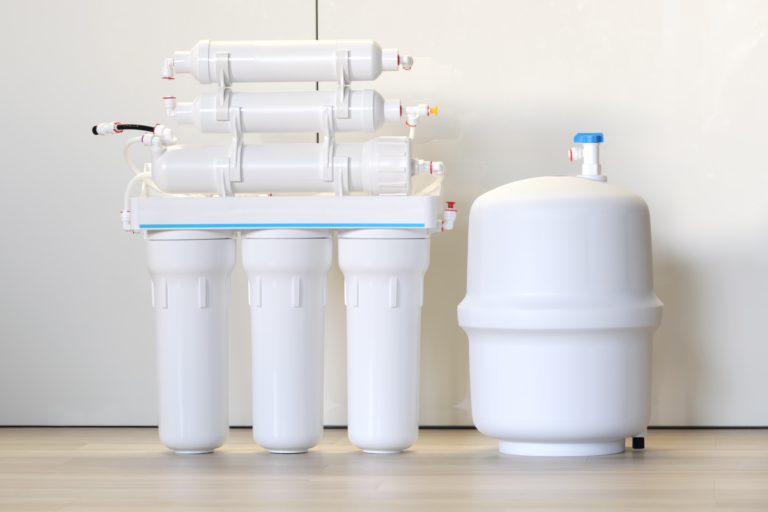
Modern drinking water systems range from simple under-sink filters to reverse osmosis units and other specialized technologies. The right choice depends on the water you’re starting with and what you want removed.
An under-sink system can be a neat solution for someone living in an apartment with limited space. A larger household with particular water-quality concerns may want something more comprehensive.
There’s no universal winner. The best system is the one that fits the actual situation.
Don’t Forget About Maintenance
This part isn’t particularly glamorous, but it’s important.
Every water treatment system needs some form of maintenance. Filters eventually become exhausted and need replacing. Softener systems may require salt or other routine attention. Some equipment needs periodic cleaning or sanitization.
A system that’s neglected won’t perform the way it was designed to perform.
Before buying, ask how often consumables need replacing and what they cost. Find out whether you can do basic maintenance yourself or whether you’ll need a technician.
It can be tempting to focus entirely on the upfront price. But a system that costs less initially and requires expensive replacement parts every few months might not be the bargain it first appears to be.
Consider the Size of Your Household
Water usage varies enormously from one home to another.
A couple living in a small apartment doesn’t have the same needs as a family of six with several bathrooms, a large washing machine, and frequent laundry loads.
This matters when selecting treatment equipment. A system that’s too small may struggle to keep up with demand, while an unnecessarily large system can increase the purchase and operating costs.
Ask about capacity and sizing rather than simply choosing a model because it has the most features.
And remember, more technology doesn’t always equal better results. Sometimes simple is better.
Look Beyond the Equipment
The company installing your system matters too.
Good equipment can still cause problems if it’s poorly installed or incorrectly sized. Before committing, ask whether technicians are trained, what installation includes, and what happens if you need service later.
Warranty coverage deserves a close look as well. Don’t just ask how many years the warranty lasts. Find out what’s actually covered, whether labor is included, and who handles repairs.
Customer reviews can also provide useful clues. Look for comments about communication, installation quality, after-sales service, and whether the company responds when something goes wrong.
Nobody expects perfection. What matters is how a business handles problems when they inevitably happen.
Think About Long-Term Value
Water treatment isn’t usually a purchase you make for fun. It’s something you install and hope to forget about.
That’s why long-term value matters more than a flashy sales pitch.
Consider the purchase price, installation, maintenance, replacement filters, electricity or water consumption, and expected lifespan. If a system saves you from constantly cleaning scale-covered fixtures or helps protect appliances, those practical benefits should be part of the equation too.
At the same time, don’t buy something simply because a salesperson says you need it. Ask questions. Request test results. Understand what the system removes and what it doesn’t.
A trustworthy professional shouldn’t have a problem explaining the details.
Better Water Starts With a Simple Decision
Choosing a water treatment system doesn’t have to become an overwhelming project. Start small: identify what’s bothering you, test the water when appropriate, and learn which technologies address that particular issue.
Hard water may call for softening. Taste or odor concerns might point toward filtration. Drinking water concerns may be better handled with a point-of-use system. In some homes, a combination makes sense.
The important thing is to avoid treating water problems with guesswork.
Once you know what you’re dealing with, the choices become much clearer. You can compare systems based on performance, maintenance, cost, and reliability instead of getting lost in technical jargon.
And that’s really what good water treatment should be about. Not owning the biggest or fanciest system, but having water that works for your household — quietly, reliably, and without becoming another thing on your list to worry about.