
As sustainability becomes a central focus in modern construction, building owners, developers, and facility managers are increasingly looking for ways to reduce water consumption and improve resource efficiency. Among the various strategies being adopted, grey water recycling has emerged as one of the most practical and effective approaches to sustainable water management.
When combined with efficient wastewater lifting systems, grey water recycling can help buildings conserve water, reduce environmental impact, and support long-term sustainability goals. As urban populations continue to grow and water resources become increasingly strained, these technologies are playing a vital role in the future of sustainable building design.
Understanding Grey Water
Grey water refers to relatively clean wastewater generated from sources such as:
- Bathroom sinks
- Showers and bathtubs
- Laundry machines
- Wash basins
Unlike black water, which contains waste from toilets and requires more extensive treatment, grey water can often be collected, treated, and reused for non-potable applications.
Common uses for recycled grey water include:
- Landscape irrigation
- Toilet flushing
- Cooling systems
- Cleaning and maintenance activities
By reusing water that would otherwise be discharged, buildings can significantly reduce their demand for fresh water supplies.
Why Grey Water Recycling Matters
Water conservation is becoming increasingly important in both residential and commercial construction. Growing populations, urbanization, and climate-related challenges are placing greater pressure on existing water resources.
Grey water recycling helps address these concerns by:
- Reducing freshwater consumption
- Lowering utility costs
- Decreasing wastewater discharge volumes
- Supporting green building initiatives
- Contributing to environmental sustainability goals
For large commercial developments, the cumulative impact of water reuse can be substantial over the life of a building.
The Importance of Wastewater Lifting Systems
While grey water recycling offers significant benefits, effective water reuse depends on the ability to collect and transport wastewater efficiently throughout a building.
This is where wastewater lifting systems become essential.
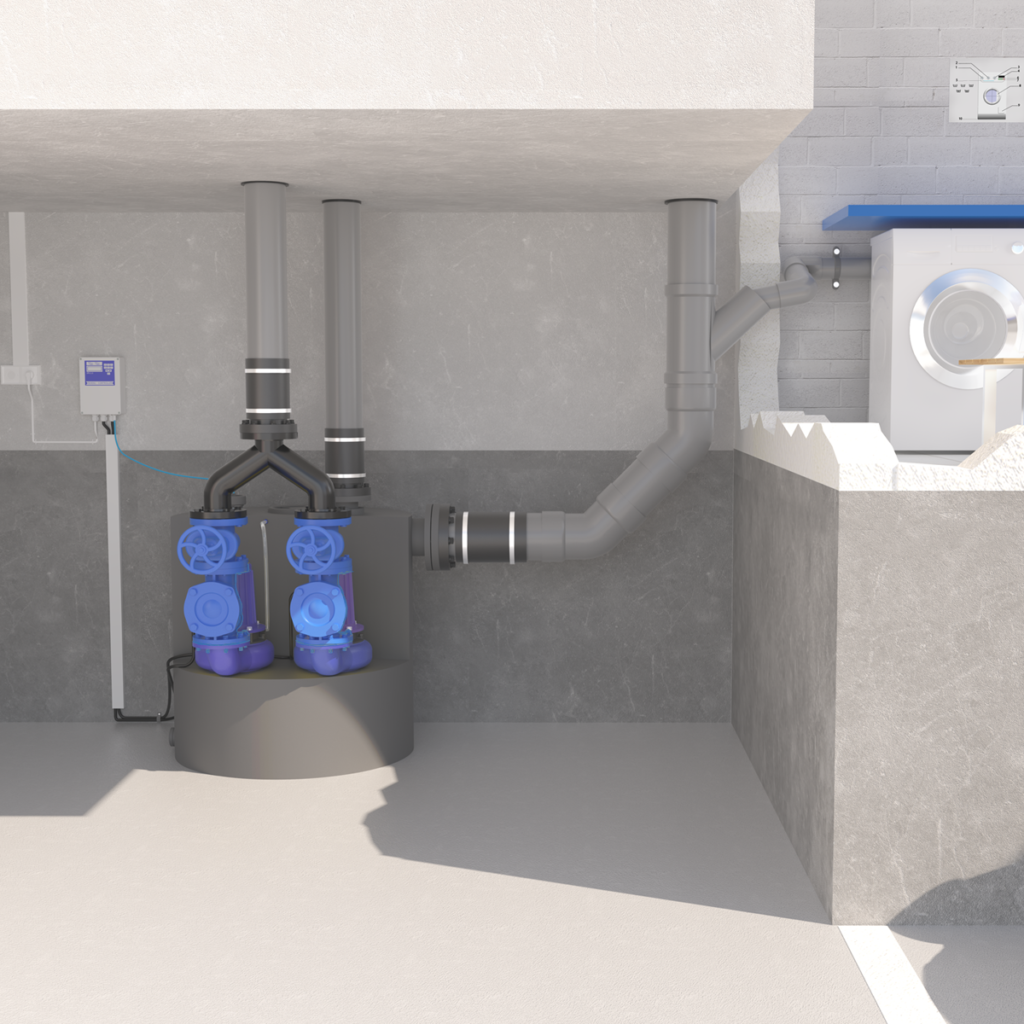
Many modern buildings include basements, underground facilities, and areas where gravity drainage alone is insufficient. In these situations, lifting systems help move grey water from lower levels to treatment, storage, or discharge points.
Without reliable pumping infrastructure, implementing an efficient grey water recycling strategy can be challenging.
Supporting Flexible Building Design
Today’s architects and developers are increasingly incorporating sustainability features into their projects from the earliest planning stages.
However, modern building designs often create drainage challenges due to:
- Multi-level layouts
- Underground facilities
- Space limitations
- Complex plumbing networks
Wastewater lifting systems provide the flexibility needed to overcome these obstacles by allowing grey water to be transported regardless of elevation differences.
This enables sustainable water management strategies to be integrated into a wider variety of building types and layouts.
Improving Efficiency in Commercial and Residential Projects
Grey water recycling is no longer limited to large-scale infrastructure projects. Residential developments, hotels, office complexes, healthcare facilities, and educational institutions are increasingly implementing water reuse systems.
To support these applications, wastewater lifting systems must be capable of handling varying flow rates while maintaining reliable operation.
High-capacity lifting solutions such as the Sanicubic 2 VX W80 can play an important role in larger projects where efficient wastewater transport is critical to overall system performance.
By ensuring dependable movement of wastewater and recycled water streams, these systems help support the operational goals of sustainable buildings.
The Role of SFA India in Sustainable Water Management
As sustainability becomes a priority across the construction industry, SFA India continues to provide wastewater management solutions that support modern building requirements.
From wastewater pumps and lifting stations to advanced drainage technologies, SFA solutions help address the challenges associated with water transport in complex building environments. These systems enable developers and property owners to implement efficient wastewater and grey water management strategies while minimizing installation constraints.
By supporting reliable wastewater movement and flexible building design, SFA technologies contribute to the development of more sustainable and resource-efficient properties.
Environmental and Economic Benefits
The combination of grey water recycling and wastewater lifting technologies provides benefits that extend beyond water conservation alone.
Key advantages include:
- Reduced strain on municipal water supplies
- Lower operating costs over time
- Improved building sustainability performance
- Greater flexibility in facility design
- Support for environmental certification programs
- Enhanced long-term resource efficiency
These benefits make grey water management an increasingly attractive investment for both new construction and renovation projects.
Looking Ahead
Sustainable building design is no longer simply a trend—it is becoming a necessity. As water conservation and environmental responsibility continue to shape construction practices, grey water recycling systems will play an increasingly important role in reducing resource consumption and improving building performance.
At the same time, reliable wastewater lifting technologies will remain essential for ensuring that recycled water systems function effectively, regardless of building layout or site conditions.
By combining innovative water reuse strategies with advanced pumping and lifting solutions, the construction industry can move closer to creating buildings that are not only efficient and functional but also more resilient and environmentally responsible for the future.