Walk into a busy restaurant, hotel, café, or healthcare facility, and you’ll probably never give the ice much thought. It lands in soft drinks, fills water glasses, chills seafood displays, and keeps cocktails perfectly cold. It’s such a routine part of daily service that people only notice it when something goes wrong.
Cloudy cubes, unpleasant tastes, strange odors, or an ice machine that constantly needs repairs can quickly become frustrating. What surprises many business owners is that the problem often isn’t the machine itself—it’s the quality of the water feeding it.
Since every cube of ice begins as water, improving that water is often the simplest way to improve the final product. It’s a small detail that can have a surprisingly big impact on customer satisfaction, equipment performance, and operating costs.
Water Quality Shapes Every Batch of Ice
Ice machines work hard every day.
In a busy commercial environment, they may produce hundreds or even thousands of pounds of ice each week. Every gallon of water passing through the machine leaves behind minerals, sediment, chlorine, and other impurities unless they’re properly managed.
Over time, those materials don’t simply disappear.
They accumulate inside internal components, reducing efficiency while increasing maintenance requirements. Scale buildup can shorten equipment lifespan, while poor water quality may affect both the appearance and taste of the finished ice.
That’s why water quality deserves just as much attention as the machine itself.
Why commercial ice machine filtration Matters
Reliable commercial ice machine filtration helps protect both the equipment and the quality of the ice it produces.
By reducing sediment, chlorine, and other unwanted particles before they reach the machine, filtration helps minimise internal buildup while supporting more consistent operation. This often translates into fewer service calls, improved efficiency, and better-tasting ice for customers.
It’s one of those investments that quietly works behind the scenes every day.
Most customers never think about the filtration system.
They simply notice that the drinks taste fresh and the ice looks clean.
That’s exactly the outcome businesses want.
Small Problems Grow Over Time
Water quality issues rarely appear overnight.
Mineral deposits build gradually.
Filters slowly become clogged.
Internal components experience increasing wear.
Because these changes happen little by little, many operators don’t notice the impact until production slows or maintenance costs begin rising.
Routine inspections and preventative maintenance help identify these concerns before they become larger, more expensive problems.
Addressing them early usually requires far less time and money than waiting for equipment failure.
Choosing the Right ice machine filtration systems
Not every business has the same water conditions or production demands.
A neighborhood café serving coffee drinks has different requirements than a large hotel, hospital, or event venue producing massive quantities of ice every day.
That’s why selecting the right ice machine filtration systems should always begin with understanding local water quality and the specific needs of the operation.
The goal isn’t necessarily to install the most complex equipment available.
It’s to choose a filtration system that effectively addresses the actual water conditions while supporting reliable machine performance.
Tailoring the solution almost always delivers better long-term value.
Better Water Protects Valuable Equipment
Commercial ice machines represent a significant investment.
Like any piece of professional kitchen equipment, they perform best when maintained properly.
Clean water reduces mineral accumulation, allowing components to operate more efficiently while lowering the risk of unnecessary repairs. Compressors, pumps, valves, and evaporators all benefit when excessive scale and sediment are kept under control.
That protection extends equipment lifespan and often reduces operating costs over time.
For businesses that rely heavily on consistent ice production, avoiding downtime can be just as important as reducing maintenance expenses.
Customers Notice More Than You Think
People may not inspect every ice cube individually, but they absolutely notice the overall experience.
A refreshing beverage served with fresh, clean-looking ice feels more enjoyable.
Cloudy cubes, unusual flavors, or lingering odors create the opposite impression, even if customers can’t immediately explain why.
Hospitality often depends on small details.
Clean glassware.
Fresh ingredients.
Comfortable seating.
Reliable service.
Quality ice belongs on that list.
When every detail works together, guests leave with a better overall impression of the business.
The Appeal of crystal clear ice
There’s something instantly appealing about crystal clear ice.
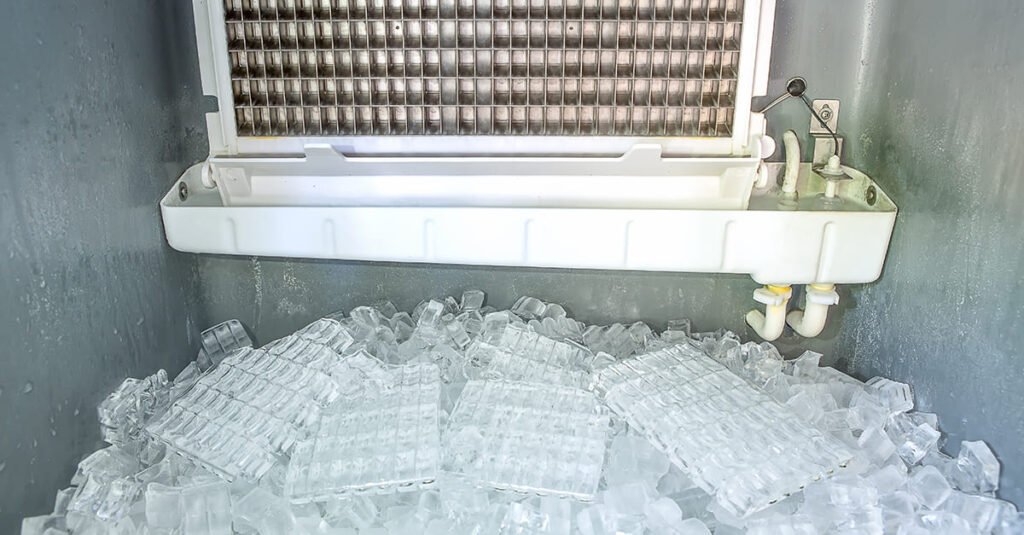
It looks cleaner, melts more evenly, and enhances the presentation of beverages in restaurants, hotels, bars, and cafés. While ice clarity depends on several factors, including machine design and freezing methods, water quality plays a major role.
Reducing impurities before freezing often contributes to clearer, better-looking cubes while helping improve taste at the same time.
For businesses focused on presentation, especially in hospitality, these visual improvements can reinforce a sense of quality that customers genuinely appreciate.
Sometimes it’s the smallest details that elevate the entire experience.
Preventative Maintenance Is Always Worth It
Installing filtration is only part of the equation.
Like any water treatment equipment, filters need regular replacement to maintain peak performance.
Ignoring maintenance eventually reduces effectiveness, allowing contaminants to reach the machine while placing unnecessary strain on internal components.
Fortunately, routine service is usually straightforward.
Replacing filters according to schedule, inspecting water lines, and cleaning the machine regularly help ensure dependable performance throughout the year.
Those simple habits often prevent emergency repairs during the busiest times of business.
Looking Ahead Instead of Reacting Later
Successful businesses rarely wait for problems to become emergencies.
They invest in systems that reduce risk before disruptions occur.
Ice machine filtration fits naturally into that philosophy.
By protecting equipment, improving product quality, and supporting consistent operation, filtration contributes to smoother daily workflows while reducing long-term maintenance costs.
It’s a practical decision that continues paying dividends every day the machine remains in service.
Better Ice Reflects Better Business
Customers may never ask about the filtration system behind your ice machine, but they’ll certainly notice the results.
Fresh-tasting beverages, attractive ice, dependable equipment, and fewer interruptions all contribute to a better customer experience and a more efficient operation behind the scenes.
Quality water creates quality ice, and quality ice quietly enhances everything from a simple glass of water to a carefully crafted cocktail. When businesses invest in proper filtration and consistent maintenance, they’re not just protecting a machine—they’re protecting the reputation that comes with serving products people can enjoy with confidence. In the long run, that’s one of the smartest investments any food service operation can make.