Water Usually Goes Unnoticed Until It Doesn’t
Most of us have a pretty simple relationship with water. We turn on the tap, fill a glass, wash our hands, start the dishwasher, and move on with our day. It’s reliable, familiar, and usually the last thing on our minds.
That changes quickly when something feels different.
Maybe your morning coffee tastes a little off. Perhaps your shower leaves a strange film on your skin. Or maybe you notice a faint odor every time you run the faucet. These moments tend to catch our attention because water is such a constant part of daily life. Even small changes feel surprisingly noticeable.
The interesting thing is that water problems rarely appear out of nowhere. More often, they develop gradually. A slight change here, a small inconvenience there. Over time, those little clues start painting a bigger picture.
Every Water Source Has Its Own Personality
It’s easy to assume water is simply water. In reality, every source carries its own characteristics.
Some homes rely on municipal systems that treat and distribute water across large areas. Others depend on private wells that draw water directly from underground sources. Geography, climate, local infrastructure, and natural mineral content all influence what eventually reaches the tap.
That’s why two homes located just a few miles apart can experience completely different water conditions. One family may struggle with mineral buildup while another deals with unpleasant odors or discoloration.
Understanding this variation is important because solving water issues often requires identifying the specific cause rather than applying a one-size-fits-all fix.
The Signs People Often Ignore
One thing I’ve noticed is that many homeowners become accustomed to water issues without realizing it.
A faucet develops mineral deposits. Glassware comes out of the dishwasher looking cloudy. Soap doesn’t lather the way it used to. The changes happen so gradually that they become part of the routine.
Humans are remarkably adaptable. We learn to work around inconveniences rather than questioning them. But those small annoyances often provide valuable insight into the condition of a home’s water supply.
Paying attention to these details can help identify potential concerns long before they become larger problems.
Why Water Quality Affects More Than Drinking
When conversations about water quality come up, people usually focus on drinking water. That’s understandable, but water affects much more than what goes into a glass.
Think about how often water interacts with your home. It runs through washing machines, dishwashers, coffee makers, water heaters, and plumbing systems. It touches your skin during showers and baths. It cleans dishes, clothes, and countertops.
Because of this, water quality has a direct impact on comfort, maintenance costs, appliance performance, and even daily routines. A seemingly minor issue can create effects throughout an entire household.
The Challenge of Mineral Buildup
One of the most common household water issues is hard water. This occurs when water contains elevated levels of naturally occurring minerals such as calcium and magnesium.
While these minerals aren’t typically harmful, they can create ongoing frustrations. Homeowners often notice scale buildup on fixtures, reduced efficiency in water-using appliances, and residue on dishes or shower doors.
The financial impact can be surprisingly significant over time. Water heaters, washing machines, and plumbing systems may require more maintenance when mineral accumulation becomes excessive. It’s one of those problems that feels small at first but gradually becomes impossible to ignore.
When Water Has an Unpleasant Odor
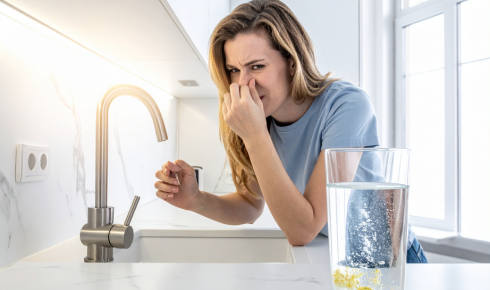
Few things trigger concern faster than smelly water. Even if the water appears perfectly clear, unusual odors can make people question its quality immediately.
Various factors may contribute to unpleasant smells. Naturally occurring sulfur compounds, bacterial activity, plumbing issues, or certain minerals can all influence odor. Sometimes the smell is noticeable only in hot water. Other times, it appears throughout the home.
The good news is that odor issues are often identifiable and treatable. The key is determining the source rather than simply masking the symptom. Once the cause is understood, effective solutions become much easier to implement.
Why Testing Matters More Than Guessing
One mistake homeowners occasionally make is assuming they already know what’s causing a water problem.
The truth is that different issues can produce similar symptoms. A metallic taste, staining, cloudy appearance, or unusual odor may have multiple potential causes. Without testing, it’s easy to misdiagnose the situation and spend money on unnecessary equipment.
Water testing removes much of the guesswork. It provides actual information about water composition, helping homeowners understand what they’re dealing with before making decisions.
There’s something reassuring about having facts instead of assumptions. Even when test results reveal no major concerns, the clarity itself can provide peace of mind.
Finding the Right Solution for Your Home
Not every water issue requires a major investment. In fact, many concerns can be addressed with relatively straightforward improvements.
The most effective problem water solutions are usually those designed around the specific characteristics of a home’s water supply. A solution that works perfectly in one location may offer little benefit somewhere else.
This is why professional evaluations and water testing often go hand in hand. They help identify the actual issue rather than relying on generic recommendations or marketing claims.
Homeowners who take a targeted approach typically achieve better results while avoiding unnecessary expenses.
Water Awareness Is Really About Peace of Mind
At the end of the day, understanding your water isn’t about becoming obsessed with every detail. It’s about awareness.
Knowing what’s flowing through your pipes allows you to make informed decisions about maintenance, filtration, appliance protection, and household comfort. It turns uncertainty into confidence.
Water plays such a central role in everyday life that even small improvements can create meaningful benefits. Better-tasting beverages, cleaner dishes, healthier plumbing systems, and fewer maintenance headaches all contribute to a more comfortable home.
The Bottom Line
Water is one of the most important resources we use, yet it’s often the one we think about the least. Until something changes.
Whether you’re noticing mineral buildup, unusual odors, or simply wondering if your water could be performing better, paying attention to those signs is a smart move. Most water issues don’t appear overnight, and many can be addressed effectively once the underlying cause is identified.
Sometimes the simplest question—”What’s going on with my water?”—opens the door to solutions that improve daily life in ways you never expected. And that’s a conversation worth having.