Most of us trust our tap water because, well, we have to. We turn on the faucet half-awake in the morning, fill the kettle, rinse fruit, make coffee, mix baby formula, cook pasta, wash vegetables, and move on with the day. Water is so woven into ordinary life that it almost disappears into the background.
But every now and then, a word starts showing up in news stories, local water reports, or conversations with neighbours, and suddenly that background feels a little less simple. PFAS is one of those words. It sounds technical, a bit cold, and honestly not very friendly. Yet it matters because these chemicals have been found in water supplies in many communities, and homeowners are increasingly asking the same basic question: what exactly is in my water?
Why PFAS Has Become Such a Big Topic
PFAS stands for per- and polyfluoroalkyl substances. That’s a mouthful, so most people simply call them PFAS. These are man-made chemicals used for decades in products designed to resist heat, water, oil, and stains. Think non-stick coatings, water-resistant fabrics, food packaging, certain firefighting foams, and industrial materials.
The concern with PFAS in water is that these chemicals don’t break down easily. They can move through soil, enter groundwater, and linger for a long time. That’s why even areas far from factories or military sites may still end up paying attention to PFAS testing and treatment.
The Name “Forever Chemicals” Isn’t Just Drama
You may have heard PFAS called forever chemicals, and while the phrase sounds a little dramatic, it exists for a reason. These compounds are extremely persistent in the environment. Once they get into water sources, they can be difficult to remove without the right treatment technology.
This is where the issue becomes personal. It’s not just about national reports or scientific studies. It’s about the water your family drinks every day. And when something is invisible, tasteless, and odorless, it’s easy to ignore until testing brings it into focus.
Why Testing Matters First
One tricky thing about PFAS is that you can’t look at a glass of water and know whether it’s there. The water may look crystal clear and taste perfectly normal. That doesn’t mean there’s no concern.
A proper water test is the sensible starting point. It helps homeowners understand whether PFAS is present, which specific compounds may be detected, and at what levels. Without testing, choosing a treatment system becomes guesswork, and guesswork can get expensive.
Some homes may need a targeted drinking water solution. Others may benefit from a broader treatment plan, especially if the water supply has multiple issues like chlorine taste, sediment, hardness, or other contaminants. Water quality is rarely a one-size-fits-all story.
Treatment Options That Actually Make Sense
Not every filter is designed to reduce PFAS. A basic pitcher filter or refrigerator filter may improve taste, but that does not automatically mean it is built for PFAS treatment. Homeowners should look for systems tested for the specific contaminants they want to reduce.
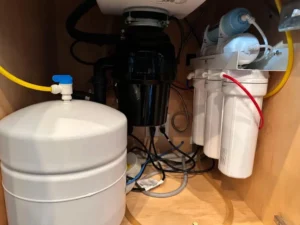
For many families, reverse osmosis systems are a strong option for drinking and cooking water. Activated carbon filters can also play an important role when properly designed and maintained. The key is selecting equipment based on certified performance and real water test results, not just marketing promises.
When people talk about PFOA and PFOS reduction, they’re usually referring to two of the most widely known PFAS compounds. These were used for years and are often included in water testing discussions. A quality treatment system should clearly state what it is tested to reduce, how often filters need replacement, and what maintenance is required to keep performance consistent.
Don’t Forget Maintenance
This part isn’t exciting, but it matters a lot. Even the best water treatment system can lose effectiveness if filters are not replaced on schedule. Some homeowners install a system, feel relieved, and then forget about it for two years. That’s not ideal.
Filters collect contaminants over time. Once they reach capacity, performance can drop. Regular maintenance keeps the system doing what it was installed to do. It also gives homeowners peace of mind, which is half the reason many people invest in water treatment in the first place.
A Practical Step Toward Cleaner Water
PFAS can feel overwhelming because the topic is technical and, frankly, a little unsettling. But homeowners don’t need to become chemists to make better decisions. They need clear testing, honest guidance, and treatment equipment suited to their water conditions.
Good water treatment is not about panic. It’s about being informed. It’s about knowing what is coming through the tap and taking reasonable steps to protect the people in your home.
Clean water should feel simple. Maybe it never really was, but with the right approach, it can at least feel manageable again. Start with testing, ask specific questions, choose proven technology, and keep up with maintenance. That’s a grounded, practical way to deal with a problem you can’t see but shouldn’t ignore.