
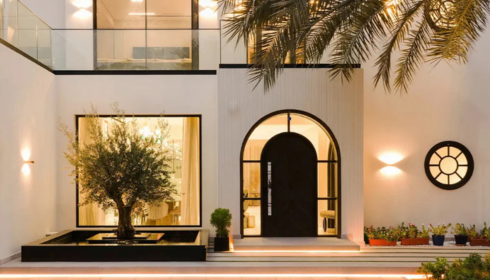


There’s a certain kind of home that stays with you.
Not because it’s flashy or over-the-top, but because it feels… complete. Balanced. Thought through in a way that’s hard to explain but easy to recognize.
You walk in, and nothing feels out of place. The lighting, the textures, the flow from one room to another—it all works together quietly, without demanding attention.
And you start to wonder: what makes a home feel like that?
It’s not just money. It’s not just taste.
It’s something deeper.
Beyond Luxury: What “High-End” Really Means
We often associate luxury with expensive materials or designer labels.
Marble countertops. Custom cabinetry. Statement lighting.
And yes, those things can elevate a space. But on their own, they don’t guarantee a home will feel cohesive or comfortable.
True high end residential design isn’t about showcasing wealth—it’s about creating harmony. Every element is considered, not just for how it looks, but for how it fits into the overall experience of the home.
It’s subtle. Intentional. And often, it’s the details you don’t immediately notice that make the biggest impact.
The Thinking Behind the Design
Every well-designed home starts with an idea.
Not a theme or a trend, but a way of thinking.
An interior design philosophy shapes how decisions are made—from the layout of the space to the smallest decorative elements. It’s the thread that connects everything, even when styles vary from room to room.
Some philosophies focus on minimalism, stripping away excess to highlight simplicity. Others embrace warmth and layering, creating spaces that feel rich and lived-in.
There’s no single right approach.
What matters is consistency. When a home is guided by a clear philosophy, it feels cohesive—even if it’s eclectic or unconventional.
Designing Around Real Life
Here’s something that often gets overlooked: a home isn’t just a visual experience.
It’s something you live in.
You move through it, interact with it, rely on it throughout your day. And if it doesn’t support those routines, no amount of beauty can make up for that.
That’s why personalized home design is so important. It shifts the focus from what looks good on paper to what actually works in real life.
Do you need a quiet space to work? A kitchen that handles busy mornings? A living area that invites relaxation?
When design starts with these questions, the result is a home that feels natural—like it was built with you in mind.
Because it was.
The Subtle Power of Materials and Texture
One of the most underrated aspects of design is how materials feel.
Not just visually, but physically.
The smoothness of a stone surface. The softness of a fabric. The warmth of wood under your feet.
These elements create a sensory experience that goes beyond what you see.
A well-designed home uses texture thoughtfully, layering different materials to create depth and interest. It’s not about using the most expensive option—it’s about choosing the right combination.
And when it’s done well, the space feels richer, more inviting.
Lighting: The Quiet Game-Changer
If there’s one element that can completely transform a space, it’s lighting.
Natural light, artificial light, the way shadows fall throughout the day—it all shapes how a room feels.
A bright, evenly lit space might feel energizing. Softer, layered lighting can create a sense of calm.
The key is intention.
Lighting shouldn’t be an afterthought. It should be integrated into the design from the beginning, shaping the mood and functionality of each space.
And when it’s right, it enhances everything else around it.
The Importance of Flow
A home isn’t a collection of separate rooms—it’s a continuous experience.
The way you move from one space to another matters.
Does the layout feel intuitive, or do you find yourself navigating awkward transitions? Do the rooms connect naturally, or do they feel disconnected?
Good design creates flow.
Not just in terms of movement, but in how each space relates to the next. Colors, materials, and proportions work together to create a sense of continuity.
And when that flow is there, the home feels cohesive—like a single, unified space rather than a series of isolated rooms.
Letting the Home Evolve
One of the biggest misconceptions about design is that it’s a one-time process.
You plan, you execute, and that’s it.
But real homes evolve.
Your needs change. Your tastes shift. Life happens.
A well-designed home allows for that evolution. It provides a strong foundation—layout, materials, key elements—while leaving room for flexibility.
You can update decor, rearrange furniture, introduce new pieces over time.
The home grows with you, rather than feeling fixed or rigid.
When Everything Feels Effortless
There’s a moment, often subtle, when a home reaches its full potential.
You stop noticing the individual elements and start experiencing the space as a whole.
It feels effortless.
You move through your day without friction. Everything is where it should be. The environment supports you without demanding attention.
That’s the goal of good design.
Not to impress, but to enhance your daily life in ways that feel natural and intuitive.
Coming Back to What Matters
At its core, design isn’t about creating something perfect.
It’s about creating something that works—for you, your lifestyle, your way of living.
When a home reflects that, it becomes more than just a place to stay.
It becomes a place where you can truly relax, recharge, and feel at ease.
And that’s what makes it elevated.
Not the materials. Not the trends.
But the feeling that everything, in its own quiet way, is exactly where it belongs.